Wondering what Paradise Valley home styles really feel like once you live in them? In a place known for custom homes, large lots, and dramatic desert views, the style of a house is about more than curb appeal. It shapes how you move through your day, how you use outdoor space, and what kind of upkeep you can expect. If you are buying or selling in Paradise Valley, this guide will help you understand the main architectural styles and how they live in real life. Let’s dive in.
Why architecture matters in Paradise Valley
Paradise Valley is not a one-style market. The town’s general plan describes it as a low-density desert community where each residence sits on at least one acre, with design encouraged to respond to mountain views, native desert landscapes, and the Sonoran Desert climate.
That matters because homes here are often shaped as much by the lot and setting as by the architectural label. Since much of the town’s growth comes through infill and redevelopment, you will see a mix of home eras and design approaches across Paradise Valley.
The town’s history also helps explain the variety. Early settlement included adobe structures and resort buildings, then post-World War II growth brought ranch-style homes on one-to-five-acre parcels, and later redevelopment expanded the local mix even further.
Ranch homes in Paradise Valley
What ranch homes look like
Ranch-style homes are an important part of Paradise Valley’s housing story. Historic town materials note that postwar settlement took off with modest ranch homes on larger parcels, which helped set the baseline for how many people still think about classic Paradise Valley living.
In general, ranch homes are single-story and horizontally oriented. They often feature open floor plans, large windows, shallow rooflines, and patios or porches that connect the interior to outdoor living areas.
How ranch homes live day to day
If you want a home that feels easy to move through, ranch style often stands out. The layout is typically straightforward, with a simple flow between kitchen, living areas, and bedrooms, which can make daily routines feel relaxed and practical.
Because many ranch homes are single-level, they can also appeal to buyers who want fewer stairs and more accessible circulation. The overall feel is often casual rather than formal, which fits the laid-back indoor-outdoor lifestyle many people want in Paradise Valley.
What buyers should watch for
In Paradise Valley, ranch homes can vary widely. Some may be closer to their original era, while others may be extensively renovated or expanded, so the quality of updates often matters just as much as the style itself.
Upkeep may be less about ornate architecture and more about lot maintenance, landscape care, and the condition of older systems or remodeling work. On hillside properties, the town’s review guide notes that items like roof materials, windows, lighting, landscaping, solar screening, and paint colors may require review.
Santa Fe-inspired homes in Paradise Valley
What Santa Fe-inspired really means
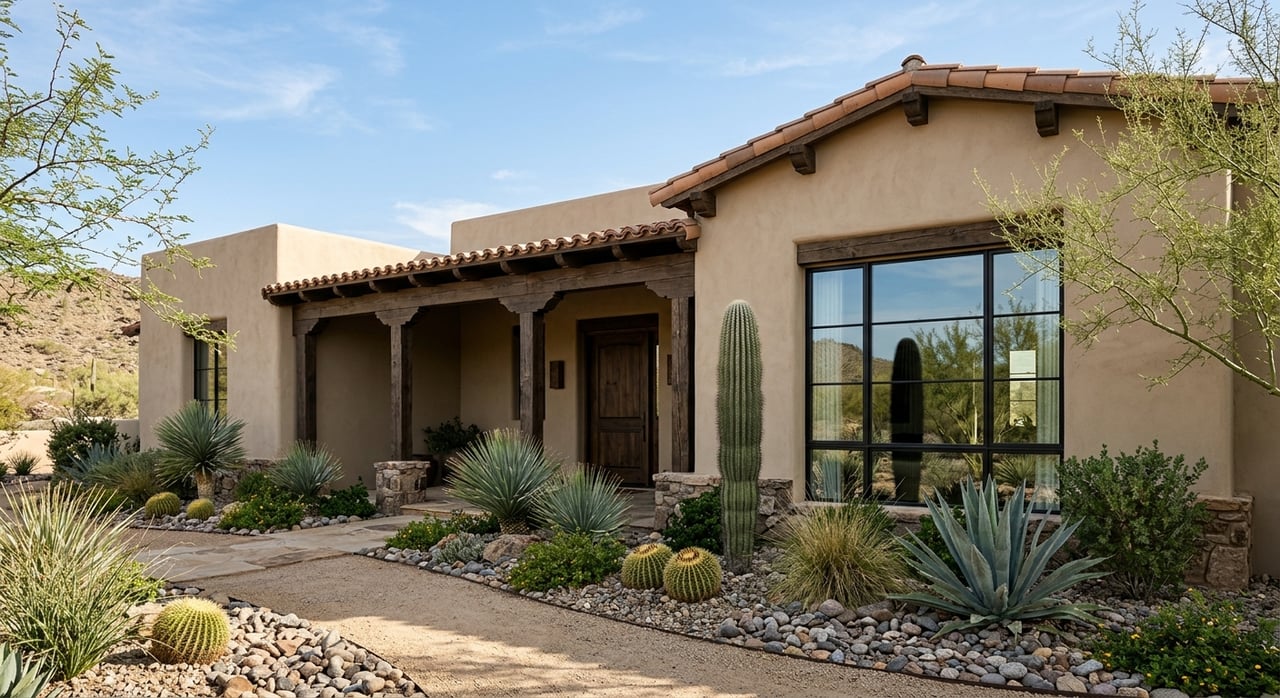
In Paradise Valley, the term Santa Fe often points to Pueblo Revival or adobe-inspired Southwestern design. These homes draw from Spanish Colonial, Mission, and Pueblo traditions, with features such as parapeted walls, rounded forms, stucco or adobe-like finishes, vigas, and courtyard-focused layouts.
You may also see design details that reinforce the regional character, including sheltered patios, recessed niches, and fireplaces that support a warm, grounded feel. In Paradise Valley, this style fits naturally with the desert setting because it responds well to sun, shade, and privacy.
How Santa Fe-inspired homes live
These homes often feel more inward-facing than ranch or contemporary designs. Instead of opening everything to wide glass walls and long sightlines, they tend to create protected outdoor rooms and a stronger sense of enclosure.
For daily living, that can mean more privacy and more shaded areas to enjoy throughout the day. If you want a home that feels rooted in the desert and offers cozy transitions between indoor and outdoor space, this style often delivers that experience.
What buyers should watch for
Santa Fe-inspired homes may look relaxed and timeless, but they still need thoughtful maintenance. Buyers should pay attention to drainage, the condition of parapets, stucco-like exterior surfaces, and any exposed beams or similar features.
On hillside homes, the town’s review process can also affect changes to roofing, repainting, tile replacement, windows, lighting, landscaping, and solar screening. If you are comparing properties, it helps to look beyond the style and understand how well the home has been maintained over time.
Contemporary and desert-modern homes
What contemporary homes look like
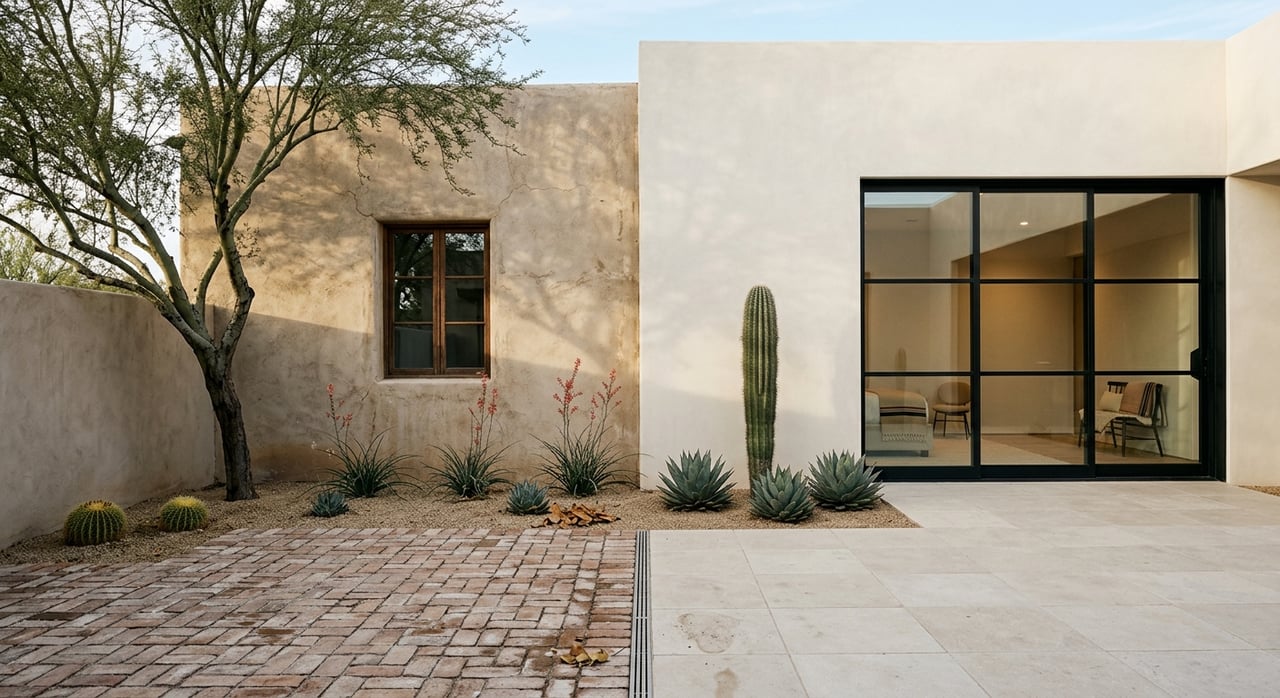
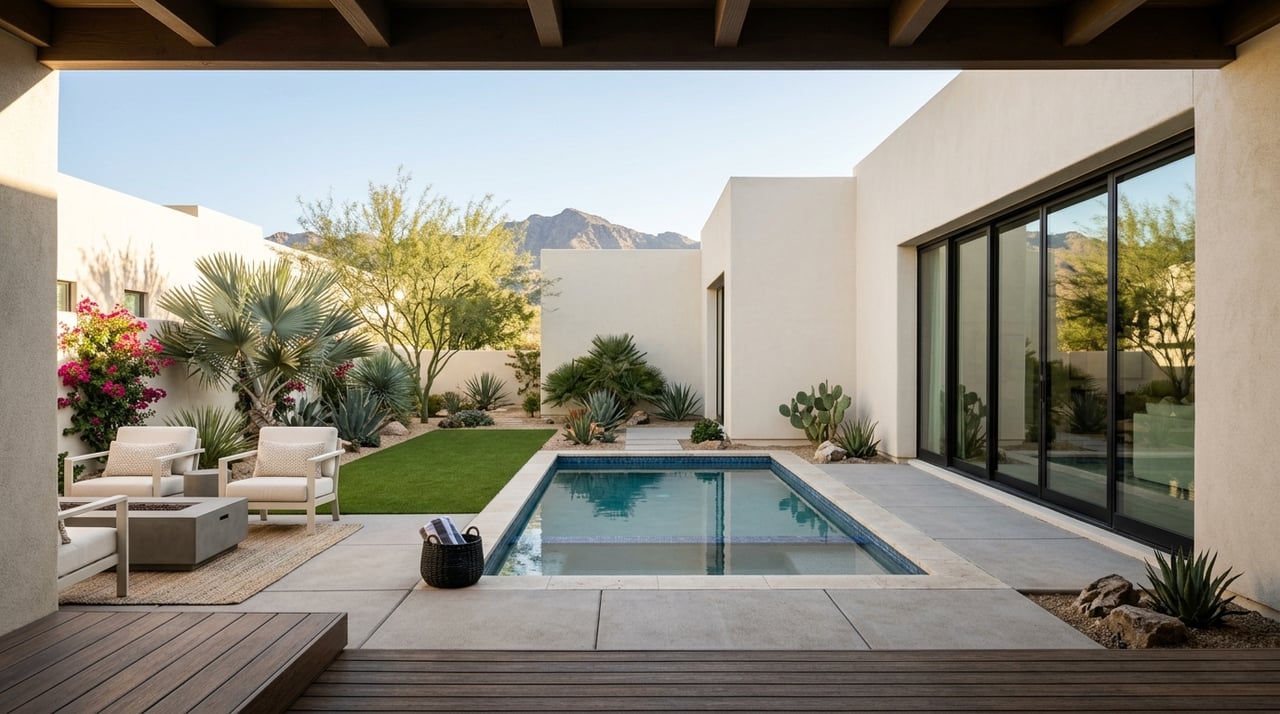
Newer development in Paradise Valley shows a strong modern and transitional direction. Town project materials describe homes that use warm, human-scaled modern design with courtyards, shade, landscaping, broad overhangs, large windows, horizontal massing, and outdoor rooms that blur the line between inside and out.
The best examples do not feel disconnected from the landscape. They tend to be designed around the lot, views, and desert climate, which gives them a stronger sense of place.
How contemporary homes live
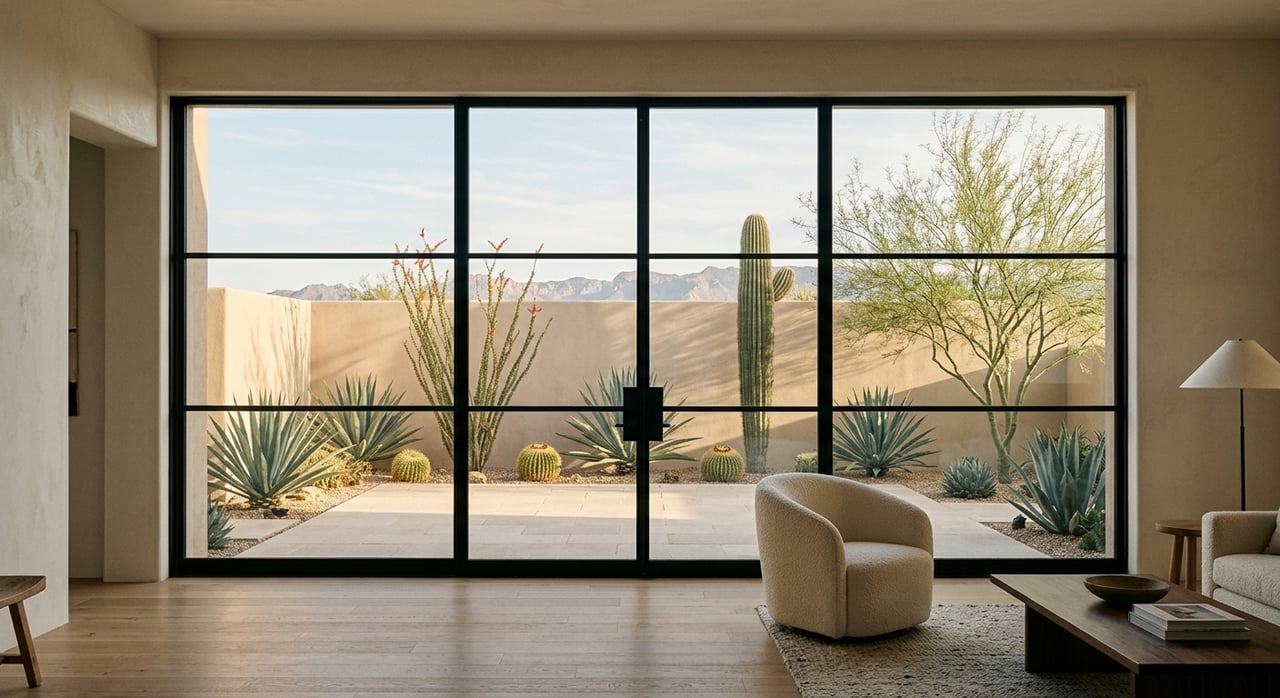
Contemporary and desert-modern homes usually prioritize light, views, and connection to the outdoors. In many of these homes, the mountain backdrop and desert setting become part of the daily living experience rather than something you only notice from the yard.
That can create a very open, airy feeling. Compared with more enclosed styles, contemporary homes often feel more view-driven and more visually connected to the site.
What buyers should watch for
These homes can be the most exacting when it comes to detail. Their appeal often depends on glazing, shading, cooling performance, and crisp exterior lines, so upkeep tends to be more visible.
In Paradise Valley, the strongest contemporary homes usually manage sun exposure well, preserve privacy, and keep mechanical and landscape elements visually quiet. If you are evaluating this style, look at how the design handles the desert climate, not just how it photographs.
Style and site go together
In Paradise Valley, architecture and site are closely linked. The town’s general plan encourages design that responds to local context, massing, scale, energy-saving materials, native desert landscapes, and the Sonoran Desert climate.
That means two homes with the same style label can live very differently based on mountain orientation, lot layout, shade, landscaping, and whether the property is on a hillside. For many buyers, the right fit comes from the combination of house style and how the site supports everyday living.
What this means if you are buying
If you are shopping in Paradise Valley, start by thinking about your routine before you focus on design labels. A ranch home may suit you if you want simple single-level living and a relaxed layout. A Santa Fe-inspired home may fit if privacy, sheltered outdoor rooms, and regional character matter most. A contemporary home may stand out if you want views, natural light, and strong indoor-outdoor flow.
This is especially important if you are relocating from out of state. Photos can show style, but they do not always show how a home handles sun, privacy, circulation, or the lot itself. That is where an informed walk-through, video tour, and careful property review can make a big difference.
What this means if you are selling
If you are selling a Paradise Valley home, your architecture should shape how the property is presented. A ranch home may benefit from highlighting ease of living, lot size, and renovation quality. A Santa Fe-inspired home often shows best when marketing emphasizes courtyards, shade, privacy, and desert character. A contemporary home may need a stronger focus on light, views, clean lines, and indoor-outdoor spaces.
In a custom-home market, buyers are not just comparing bedrooms and bathrooms. They are also comparing lifestyle, setting, and how a home feels in person. That is why thoughtful staging, strong visuals, and clear positioning matter so much in Paradise Valley.
If you want help understanding how a Paradise Valley home style will appeal to buyers or how a specific property really lives day to day, I can help you look past the label and focus on what matters most. When you are ready, connect with Kerri Dewaters for calm, strategic guidance tailored to your move.
FAQs
What architectural styles are common in Paradise Valley homes?
- Paradise Valley commonly includes ranch-style homes, Santa Fe-inspired or Pueblo Revival homes, and contemporary or desert-modern homes, along with a mix of eras created by infill and redevelopment.
How do ranch-style homes live in Paradise Valley?
- Ranch homes often offer single-level living, simple circulation, open common areas, and an easy connection to patios or outdoor space, which can create a relaxed day-to-day feel.
How do Santa Fe-inspired homes live in Paradise Valley?
- Santa Fe-inspired homes usually feel more private and inward-facing, with courtyards, shaded patios, and a stronger sense of enclosure that works well in the desert climate.
How do contemporary homes live in Paradise Valley?
- Contemporary homes in Paradise Valley often prioritize natural light, mountain views, large windows, and indoor-outdoor flow, making the site and landscape feel like part of the living space.
Why does lot orientation matter for Paradise Valley homes?
- In Paradise Valley, lot size, mountain views, shade, landscaping, and hillside conditions can shape privacy, sun exposure, and daily livability just as much as the home’s architectural style.
What should buyers know about hillside home changes in Paradise Valley?
- The town’s review process may apply to changes involving items such as roof materials, windows, lighting, landscaping, solar screening, paint colors, grading, drainage, and height, especially on hillside properties.